
Best Potatoes for French Fries: Why Russets Win
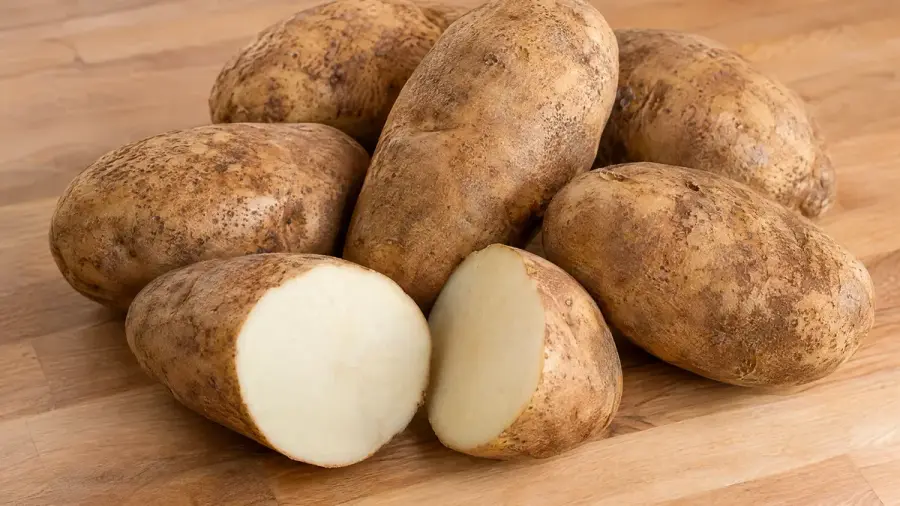
The best potatoes for french fries are russets, and the Russet Burbank above all. The Idaho Potato Commission gives the reason in one line: the more solids a potato has, the less water it holds, and the crispier the fry. Russets are high in solids, so they fry golden outside and fluffy inside.
Variety is only half of it. How the potatoes were stored, and even the time of year, change how they fry. Everything below comes from the Idaho Potato Commission's guides for fresh-cut fries and from the FDA; sources are listed at the bottom. This page is part of our full guide to making crispy french fries.
Best potatoes for french fries at a glance
| Potato | For fries | What the Idaho Potato Commission says |
|---|---|---|
| Russet Burbank | Best choice | On its "A list" for fries; available most of the year |
| Ranger, Umatilla, Alturas and Classic russets | Good | Other Idaho russet varieties that perform pretty well |
| Russet Norkotah | Good, with a change | Perfectly acceptable with a lower first-fry temperature and more time |
| Kennebec | Used by some fry shops | A rounder yellow chipping potato; its thin skin bruises easily and can turn green in light |
| Yukon Gold | Can be fried | A medium-starch potato that typically does not have the higher solids |
Why russets make the crispiest fries
You can fry any potato, the Commission says, but only a few varieties fry up well. The difference is solids and starch content. A high-solids potato carries less water, and water is what the fryer has to drive out before a fry can crisp.
- Texture: the high solids of an Idaho russet give a golden color and a fluffy, baked-potato inside.
- Shape: a russet's long oval shape cuts into long fries.
- Evidence: the Commission cites a study by the Johnson & Wales University College of Culinary Arts that found the Idaho Russet Burbank to be the best potato for fresh french fries.
So french fries from russet potatoes are the safe choice, and if the bag names the variety, Russet Burbank is the one to pick.
Other potatoes you can fry
- Other russets. When Russet Burbanks are between crops, the Commission names the Ranger, Umatilla, Alturas and Classic russets as varieties that perform pretty well.
- Russet Norkotah. It works if you lower the first-fry temperature and give it longer: 5 to 7 minutes at 325°F, against 3 minutes at 350°F for a Russet Burbank. See our guide to the oil temp for french fries.
- Yellow potatoes. The Commission notes that people in Europe prefer a yellow-flesh potato for fries, and that some U.S. fry shops swear by the Kennebec. Yukon Gold, the best-known yellow variety, can be fried to a yellow-gold color, but it is a medium-starch potato without the higher solids of a russet.
What size and grade to buy
- Size: for hand-cut fries the Commission recommends potatoes of 7 to 15 ounces. Very large potatoes, about a pound or more, are too big for most fry cutters without being halved first.
- Shape: look for an oval shape, good length and shallow eyes.
- Grade: No. 1 potatoes are more uniform, with fewer cuts, bruises and odd shapes. No. 2 potatoes cost less and, the Commission stresses, taste the same. They simply take more trimming.
Once you have them home, our guide shows how to cut potatoes into fries.
Storage matters as much as variety
A good potato stored badly makes bad fries. When fries come out brown outside but not done inside, the Idaho Potato Commission says cold storage is usually the cause.
- Keep potatoes in a cool, dark place, ideally around 55°F.
- Do not refrigerate them. Below about 40°F, the starch in a potato begins turning into sugar. Sugary potatoes brown quickly in the fryer, sometimes before they are cooked through.
- The FDA gives a second reason: storing potatoes in the refrigerator can increase acrylamide during cooking.
- Do not store them warm either. Kept near a stove or other heat, potatoes wrinkle and sprout early.
Potatoes that have been stored too cold can be rescued. The Commission says that holding them at a warmer temperature for 4 to 7 days converts most of the sugar back to starch.
Why the same potatoes fry differently through the year
Idaho harvests potatoes once a year, from August through the middle of October, and stores them to supply the rest of the year. That makes fries seasonal in a way most cooks never notice.
- New-crop potatoes (late summer and fall) hold more water. The Commission quotes chef Daniel Boulud's observation that freshly harvested potatoes get soggy faster than aged ones. They can also carry excess starch and sugar, so rinse the cut fries until the water runs clear.
- Old-crop potatoes (the months before harvest) have lost some water in storage, so their starch-to-water ratio is higher. Those fries crisp up quickly.
What restaurants use
By the Idaho Potato Commission's account, chains that sell fresh-cut fries rely overwhelmingly on the Idaho Russet Burbank. It has written that Five Guys and Wingstop prefer that variety when it is available, and that McDonald's built its early reputation on fresh-cut Idaho Russet Burbanks before moving to frozen fries. Whatever the variety, the Commission's summary is the same: a high-solids, low-moisture potato is the key to a good fry.
To see how the chains' fries compare on calories, see the table in our crispy french fries guide, or our ranking of the best fast food fries.
Sources
- Idaho Potato Commission: Ten steps to better homemade Idaho Potato french fries, French Fried Potatoes, Is There One Best Way To Make Fresh Cut Fries For My Restaurant?, The Best Hand-Cut Idaho French Fry Yield, Q&A: How to Make Perfect French Fries and How to Make the Best "Signature" Fresh French Fries. These guides were written for restaurant kitchens.
- U.S. Food and Drug Administration: Acrylamide and Diet, Food Storage, and Food Preparation.