
Secrets to Perfectly Crispy French Fries
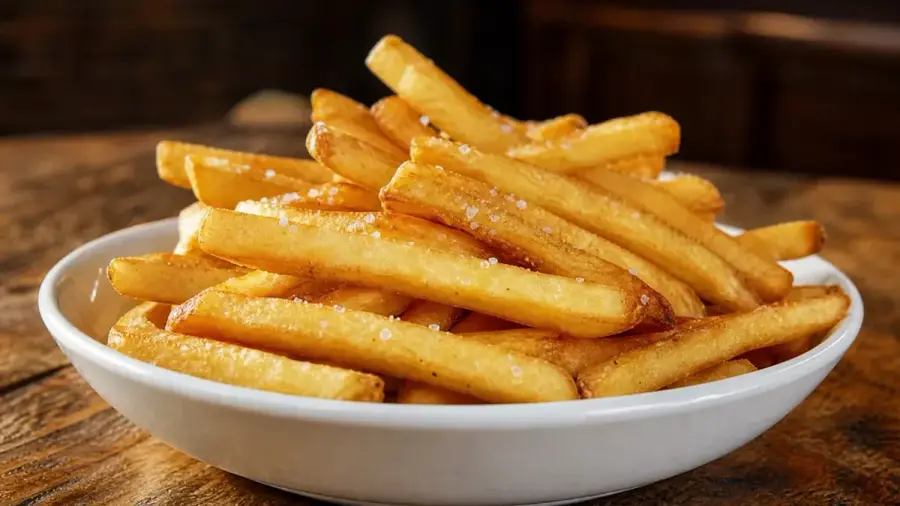
Three things ruin homemade french fries: the wrong potato, wet potatoes going into the oil, and a single fry in oil that is too hot. Fix those three and you get fries that are crisp outside and fluffy inside.
Here is the short answer to how to make crispy french fries. Use russet potatoes, rinse the cut fries until the water runs clear, dry them well, then fry them twice: a first fry at 325°F to 350°F until they are cooked but still pale, and a final fry at 350°F for 2 to 4 minutes until golden. Salt them after they come out of the oil and eat them right away.
We did not invent these numbers. Every temperature, time and tip in this guide comes from the Idaho Potato Commission (the state body for Idaho potato growers, which publishes fry guidance for restaurants), the USDA Food Safety and Inspection Service and the FDA. The fast food calorie figures near the end come from each chain's own nutrition information, which we checked in October 2026. Sources are listed at the bottom.
Crispy french fries at a glance
| Step | What to do | The number that matters |
|---|---|---|
| Potato | Use russet potatoes, kept out of the fridge | Store near 55°F, never below 40°F |
| Cut | Cut even strips with a sharp blade | About 3/8 inch thick |
| Rinse and soak | Rinse until the water runs clear, then soak in cold water | 15 minutes to 2 hours |
| Dry | Spin or pat the fries dry | No visible water |
| First fry (blanch) | Cook through without browning | 325°F to 350°F, about 3 to 7 minutes |
| Rest | Cool, then chill uncovered | Room temperature, then the fridge |
| Final fry | Crisp to golden | 350°F for 2 to 4 minutes |
| Salt and serve | Salt away from the oil, serve at once | Within 10 minutes |
What you need for homemade french fries
- Russet potatoes. The Idaho Potato Commission bases its fry yields on a 4-ounce portion per person.
- Frying oil with a high smoke point, such as canola, peanut, corn, sunflower or vegetable oil, and enough of it to cover the fries.
- Salt.
- Optional: white vinegar or lemon juice for the soaking water (1 tablespoon per gallon).
- A deep fryer, or a deep, heavy pot or skillet. The USDA advises against cast iron for deep frying because it breaks oil down faster than other metals.
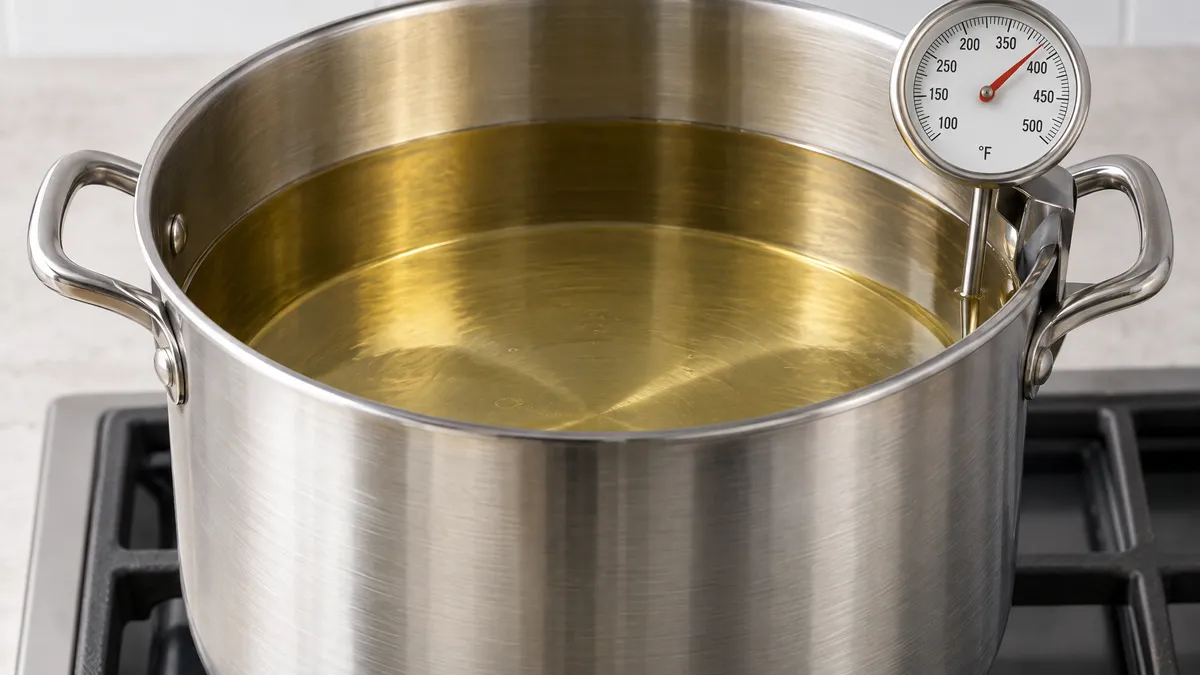
- A deep-fry thermometer, unless your fryer has a thermostat. The temperatures below only help if you can measure them.
- A slotted metal spoon or tongs (never plastic, which can melt in hot oil), a salad spinner or clean towels, and a tray lined with paper towels.
Best potatoes for french fries
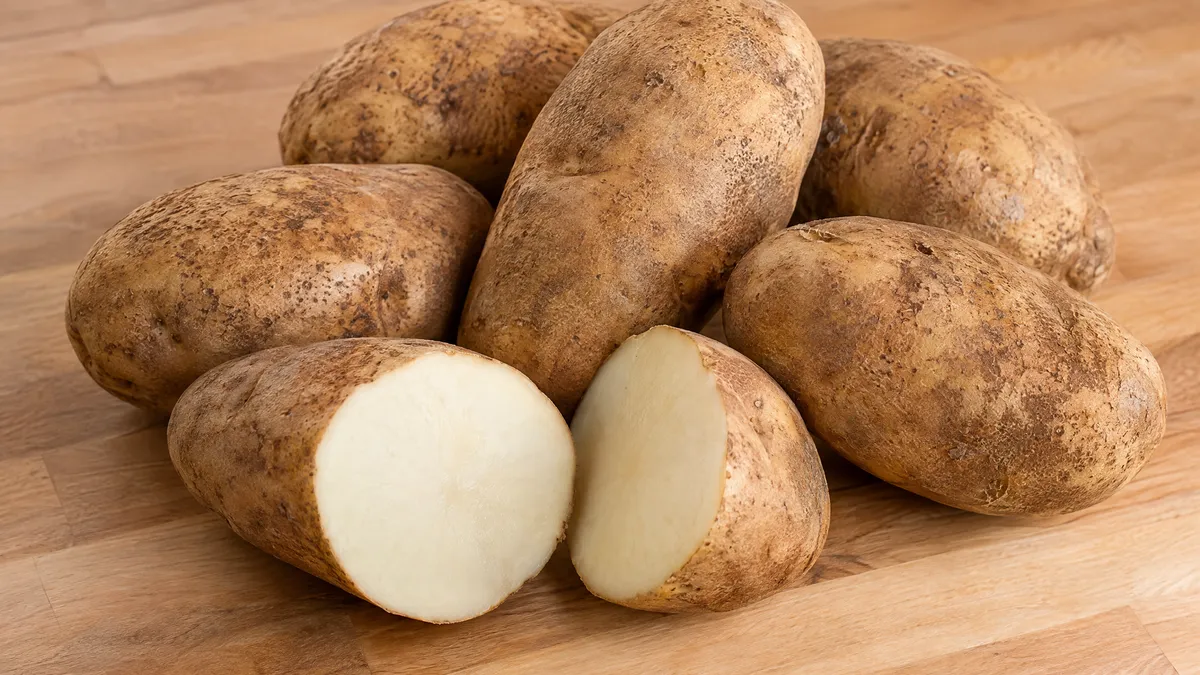
The best potatoes for french fries are russets. The Idaho Potato Commission explains why in one line: the more solids a potato has, the less water it holds, and the crispier the fry. Russets are high in solids, so french fries from russet potatoes come out golden outside with a fluffy, baked-potato center. The Russet Burbank is the variety the Commission puts at the top of its list. Our guide to the best potatoes for french fries compares the varieties.
Yellow potatoes such as Yukon Gold can be fried, but the Commission describes Yukon Gold as a medium-starch potato that typically does not have the higher solids of a russet.
How you store the potatoes matters as much as which ones you buy:
- Keep them in a cool, dark place, ideally around 55°F.
- Do not refrigerate them. Below about 40°F the starch in a potato starts turning into sugar. Those potatoes brown quickly in the fryer, sometimes before the inside is cooked. The FDA adds a second reason: storing potatoes in the refrigerator can increase acrylamide during cooking.
- Wash and dry the potatoes before cutting. Packed potatoes can still carry traces of sand or soil.
How to cut potatoes into fries
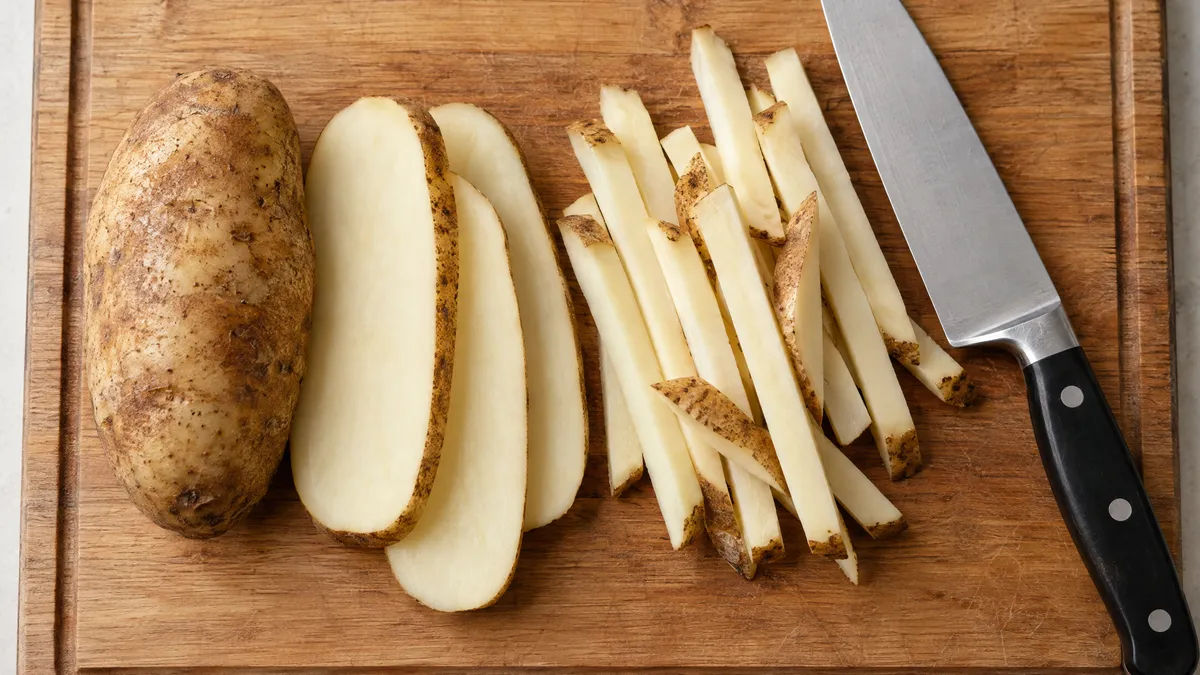
To make french fries from potatoes without a fry cutter, cut each potato lengthwise into flat slabs, stack a few slabs, and cut them lengthwise again into strips. Cutting along the length of a long, oval russet gives you long fries. For photos of each step, see how to cut potatoes into fries.
- Thickness: a 3/8-inch fry is a good target. It is the cut used by a Chicago fry shop whose method the Idaho Potato Commission reviewed and called right on target. Thicker steak-cut fries need a longer first fry than thin shoestrings, so keep every strip the same thickness.
- Use a sharp knife. A dull blade leaves jagged edges, and the Commission notes that those edges fracture into small broken pieces in the water and in the oil. A mandoline also works for small batches.
- Drop the cut fries straight into cold water so they do not darken while you finish cutting.
Skin-on fries or peeled?
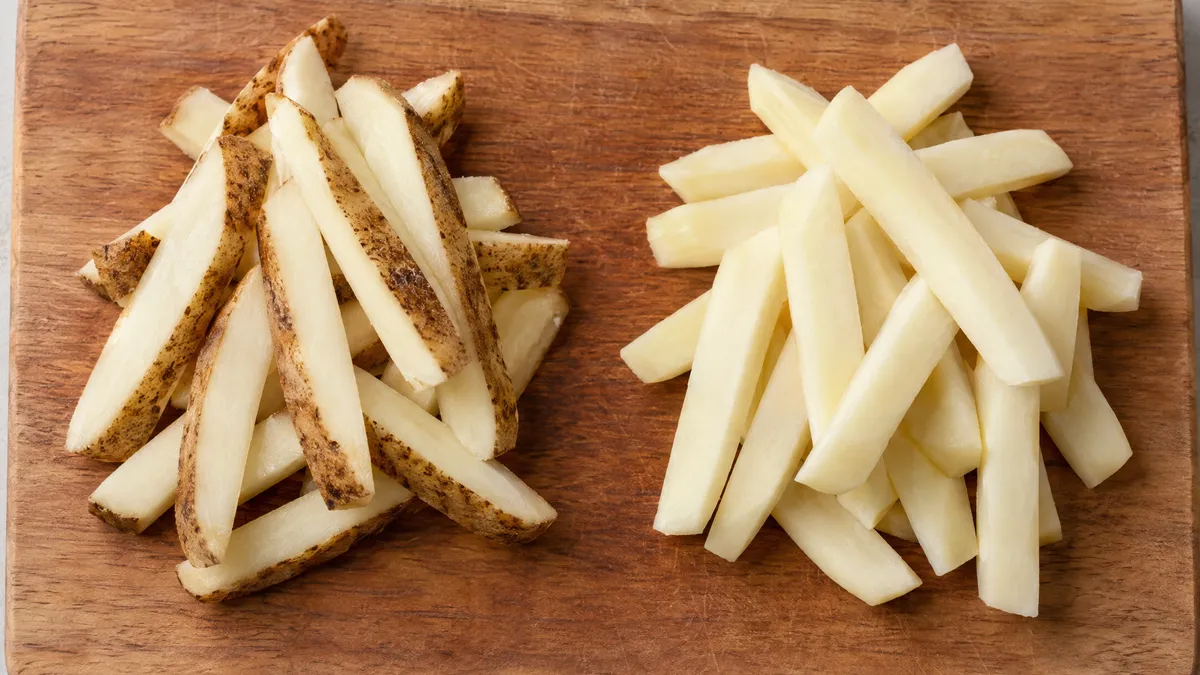
Either works. The Idaho Potato Commission recommends skin-on fries: keeping the skin on adds to the homemade look and the flavor. If you peel the potatoes, the Commission says the cut fries should be chilled in cold water for 30 minutes to 2 hours before frying for maximum crispness.
Rinse, soak and dry: how to make fries crunchy
Do not skip this step. It is what separates limp fries from crunchy fries.
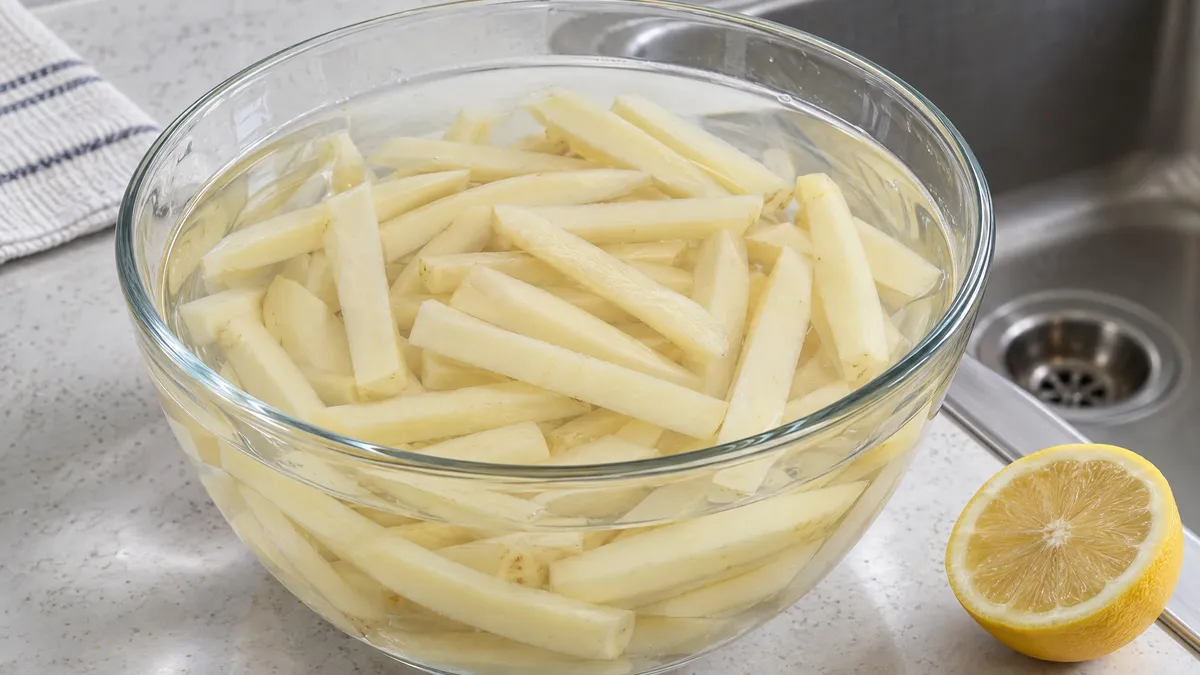
- Rinse. Rinse the cut fries in cold water until the water runs clear. That removes the excess starch and sugar on the surface.
- Soak. Leave the fries in cold water for at least 15 to 30 minutes, which is the soak the FDA recommends before frying, and up to 2 hours. A tablespoon of white vinegar or lemon juice per gallon of water keeps them from darkening.
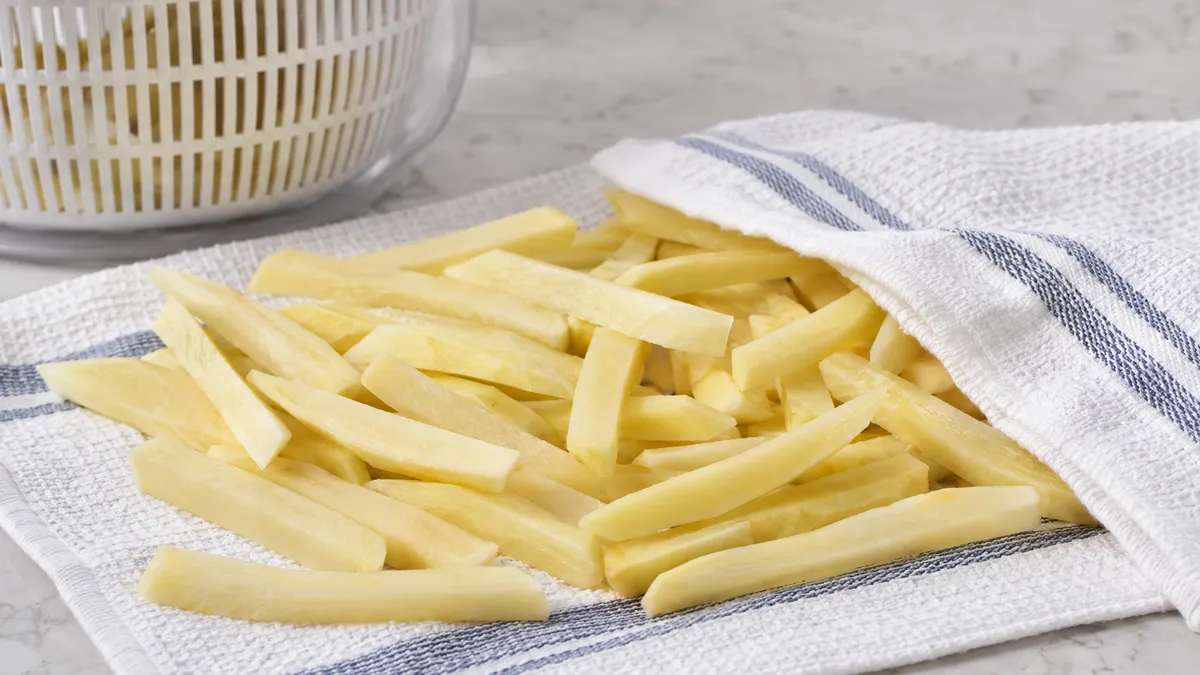
- Dry. Drain the fries and dry them thoroughly in a salad spinner or with clean towels. Dry fries spatter less and absorb less fat. Wet fries are dangerous: the USDA warns that water hitting hot oil turns to steam instantly and makes the oil splatter.
Oil temp for french fries
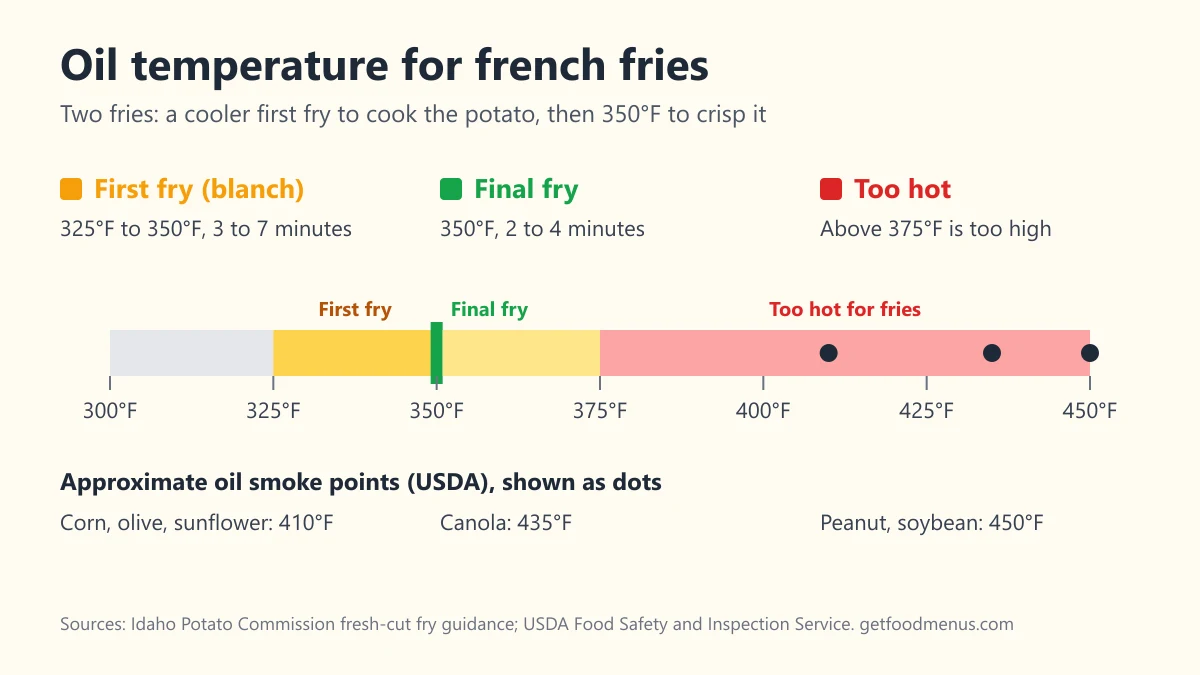
The right oil temp for fries is well below the hottest your oil can go. If you are asking what temperature to fry french fries at, the Idaho Potato Commission's answer is 350°F for the final fry.
- First fry (blanch): 325°F to 350°F. This cooks the potato through without browning it.
- Final fry: 350°F. This drives off more moisture and crisps the outside.
- Never above 375°F. The Commission lists frying too hot as one of the biggest mistakes with fresh-cut fries, and in several of its guides it tells cooks not to go past 350°F at all. Hotter oil also breaks down faster.
Expect the temperature to fall when the potatoes go in. The Commission notes that a load of cold potatoes can pull the oil down by 50 degrees or more, which is why small batches matter. Our guide to the oil temp for french fries goes through each stage.
Which oil to use
The USDA recommends oils with a high smoke point for deep frying: olive, peanut, canola, corn, grapeseed, safflower, sunflower and vegetable oil. All of them smoke well above frying temperature.
| Oil | Approximate smoke point (USDA) |
|---|---|
| Peanut, safflower, soybean | 450°F |
| Grapeseed | 445°F |
| Canola | 435°F |
| Corn, olive, sesame seed, sunflower | 410°F |
How to make french fries, step by step
This is the full french fries recipe, using the double-fry method the Idaho Potato Commission recommends for homemade french fries in oil.
- Prepare the potatoes. Wash the russets, cut them into even 3/8-inch strips, rinse until the water runs clear, soak in cold water, then dry them thoroughly.
- Heat the oil to 325°F. Use a deep fryer or a deep, heavy pot, with the pot dry and away from water before the oil goes in.
- First fry. Add the fries in small batches. If you use a fryer basket, fill it no more than half full. Fry until the fries are cooked through but still light in color. A properly blanched fry bends and feels almost rubbery. For timing, the Commission gives 3 minutes at 350°F for Russet Burbank potatoes and 5 to 7 minutes at 325°F for the Russet Norkotah variety. The fry is done when its center reaches 160°F.
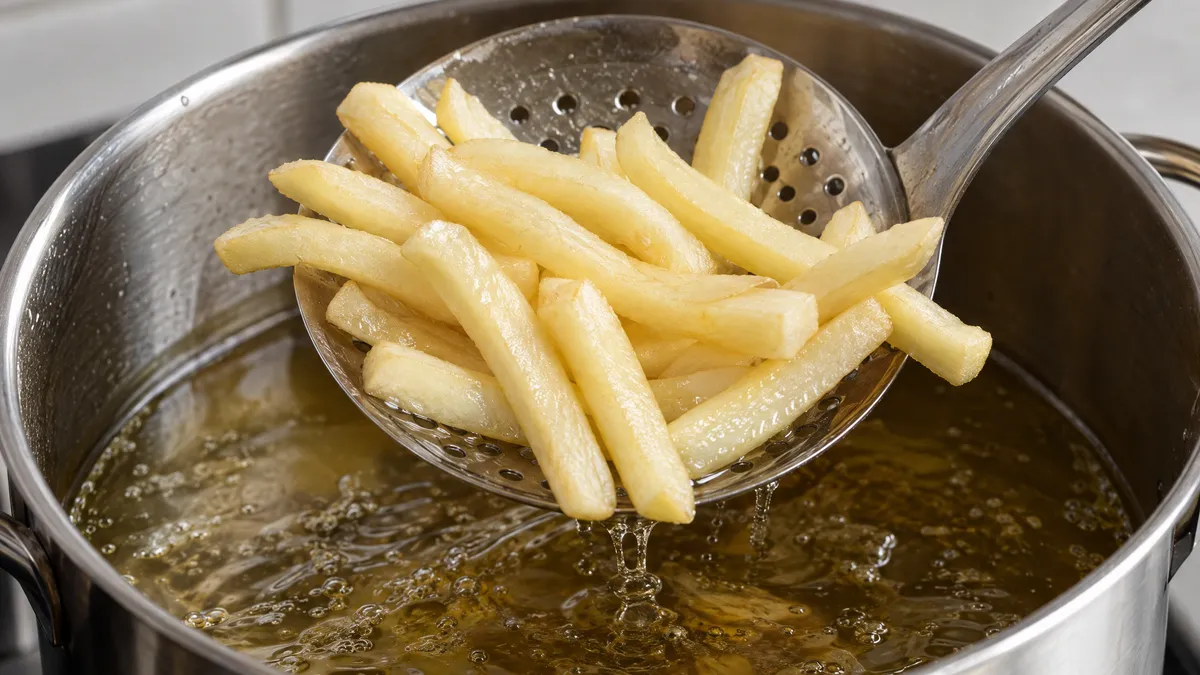
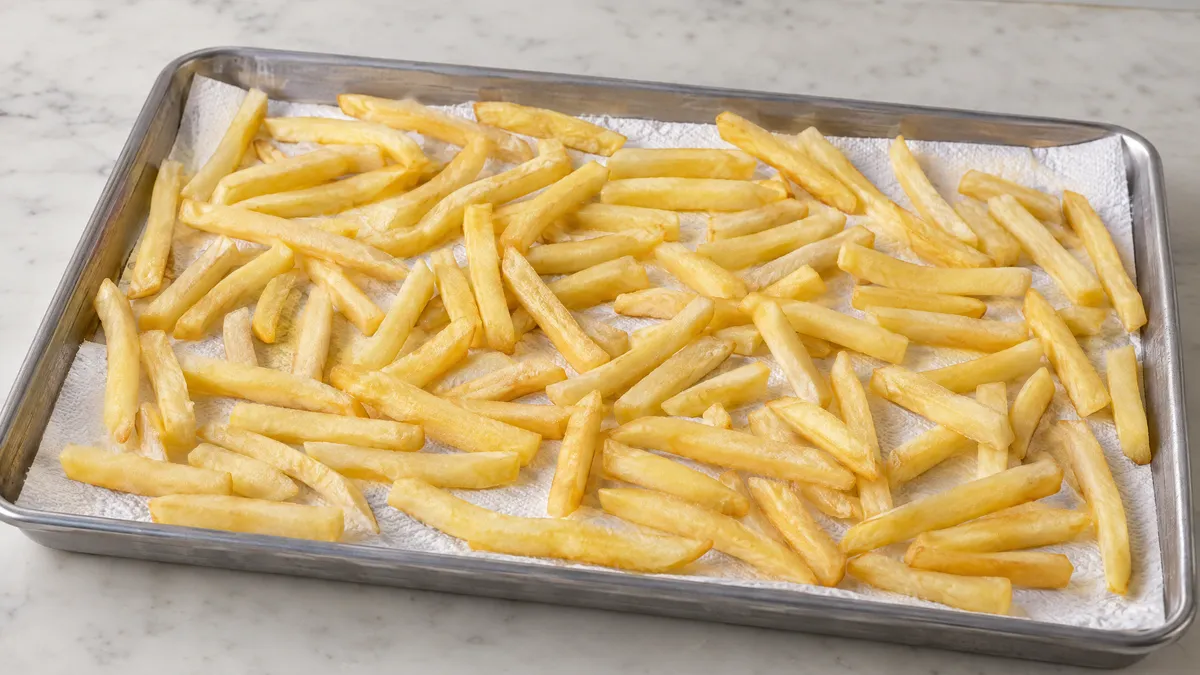
- Cool and chill. Lift the fries out, drain them, and let them cool to room temperature. Then refrigerate them uncovered until you are ready to eat. Do not put a lid on warm fries: the steam makes them soggy. This rest can be as long as overnight.
- Final fry at 350°F. Fry the chilled fries for 2 to 4 minutes, again in small batches. After about 30 seconds, give the basket a shake or stir the pot gently so the fries do not stick together and the ones in the middle cook evenly.
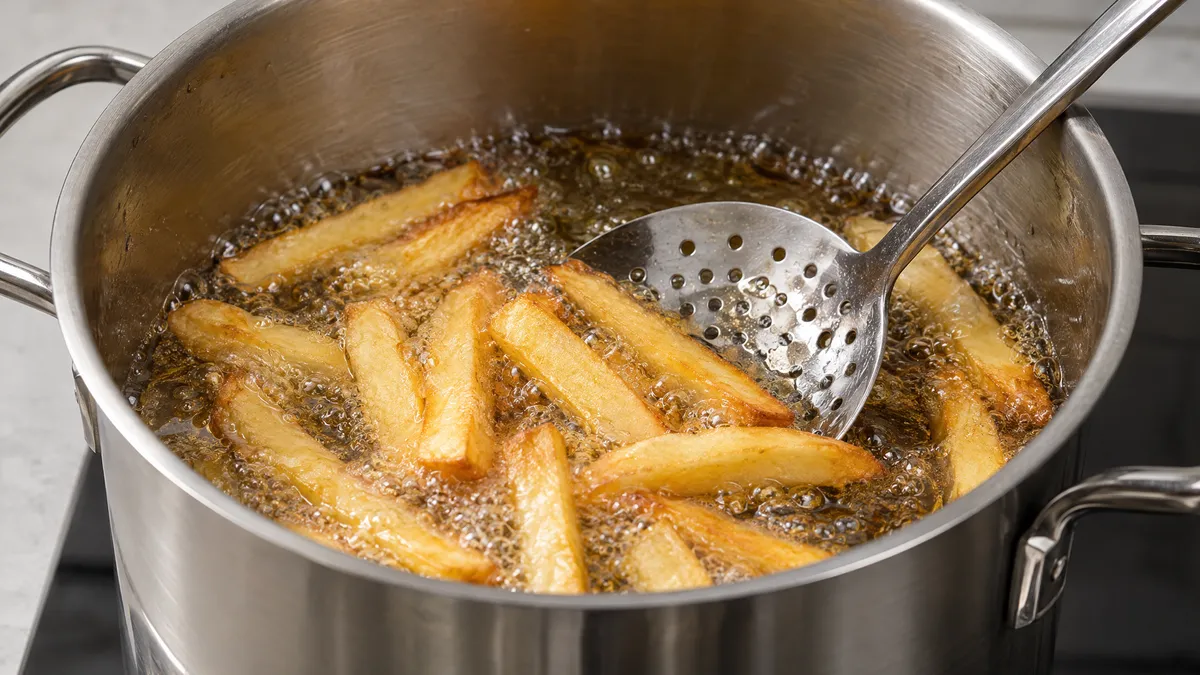
- Pull them when they are golden. The FDA advises cooking fries to a golden yellow color rather than brown, because the brown areas tend to contain more acrylamide.
- Drain and salt. Let the oil drip off for about 10 seconds, tip the fries onto a tray, and salt them there. Do not salt over the pot, because salt that falls into the oil breaks it down faster.
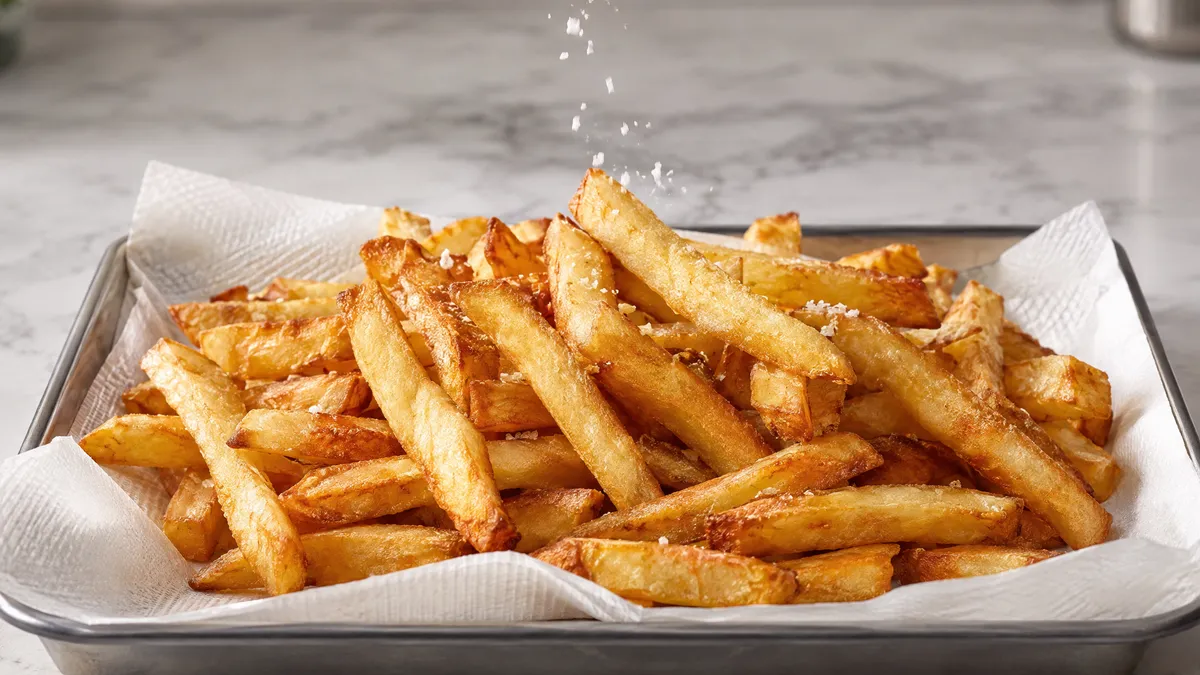
- Serve immediately. Piling hot fries into a bag or a covered bowl steams them soft.
Why the double fry works
The Idaho Potato Commission calls the first fry mandatory for good fries, and gives the reason. The first fry removes a large share of the moisture and cooks the inside to a fluffy, baked-potato texture. While the fries rest, the surface sets, so less oil gets in during the second fry. The second fry removes more moisture and crisps the outside. Without the first fry, the potatoes take much longer to lose their water and to crisp.
How long to fry french fries
How long to deep fry french fries depends on the cut and the potato, but the official figures give a clear range:
| Stage | Oil temperature | Time |
|---|---|---|
| First fry, Russet Burbank | 350°F | 3 minutes |
| First fry, Russet Norkotah | 325°F | 5 to 7 minutes |
| Final fry | 350°F | 2 to 4 minutes |
So the fries spend roughly 5 to 11 minutes in the oil in total, split across two fries. Thicker cuts sit at the long end. Go by the signs as much as the clock: bendy and pale after the first fry, golden after the second.
Why homemade fries turn out soggy or dark
If your crispy homemade fries are not crispy, the cause is almost always on this list. These are the mistakes the Idaho Potato Commission sees most often.
| Problem | Likely cause | Fix |
|---|---|---|
| Limp, greasy fries | Too many fries in the oil at once, so the temperature drops and the potatoes absorb more oil | Fry small batches; keep a basket no more than half full |
| Soft in the middle of the batch | The fries were never shaken or stirred | Shake or stir partway through the final fry |
| Not crisp enough | Only one fry, with no first fry | Blanch, cool, then fry again |
| Dark outside, raw inside | Potatoes stored too cold, so their starch turned to sugar | Keep potatoes out of the fridge; rinse cut fries until the water runs clear |
| Dark fries and oil that goes off fast | Oil hotter than 375°F | Hold the final fry at 350°F |
| Soggy a few minutes after frying | Covered or bagged while hot, or left sitting | Serve at once; the Commission holds fries no longer than 10 minutes |
| Short, broken fries | A dull blade left jagged edges | Cut with a sharp knife |
| Limp fries with poor texture | Under-frying, or salting too soon | Fry to golden and salt after frying |
Fries in a deep fryer or in a pot
You can make deep fried french fries either way. The method and the temperatures stay the same.
- In a deep fryer: read the owner's manual first, and do not overcrowd the basket. The USDA says an overcrowded basket causes undercooking, uneven cooking and overflowing oil. Do not add food while the basket is sitting in the oil.
- In a pot on the stove: use a deep, heavy pot or skillet rather than cast iron, and lift the fries out with a slotted metal spoon or tongs.
Deep frying safely, and what to do with the oil
Frying oil can pass 400°F, so the USDA's rules for deep frying at home are worth following every time:
- Never leave hot oil unattended.
- Keep water away from the oil, and make sure the pot or fryer is wiped dry before you fill it.
- Keep a kitchen fire extinguisher nearby. If the oil catches fire, never use water. Cover the pot with a metal lid or use the extinguisher, and call 911.
- Let the oil cool completely before you clean up. The USDA suggests waiting about 2 hours before cleaning a fryer.
- To reuse the oil, strain it through cheesecloth or a sieve and store it in a sealed, light-proof container for up to 3 months. Throw it out if it is cloudy, foams, or smells or tastes off.
- Do not pour oil down the sink. Pour cooled oil into a sealable container and put it in the trash, or take it to a recycling drop-off if your area has one.
- Refrigerate leftover fries within 2 hours.
How the chains made fries famous
The double fry is an old restaurant method. The Idaho Potato Commission recounts that McDonald's built its early reputation on fresh-cut Idaho Russet Burbank potatoes that were washed, peeled, cut and blanched in the restaurant, then fried in beef tallow, before the chain moved to frozen fries. The Commission has also written that chains known for fresh-cut fries, including Five Guys and Wingstop, prefer the Idaho Russet Burbank.
Beef tallow has not disappeared from menus either: Steak 'n Shake lists Beef Tallow Fries on its current menu.
If you would rather order than fry, our ranking of the best fast food fries and our list of the best value fries compare the chains side by side.
Fast food fries calories compared
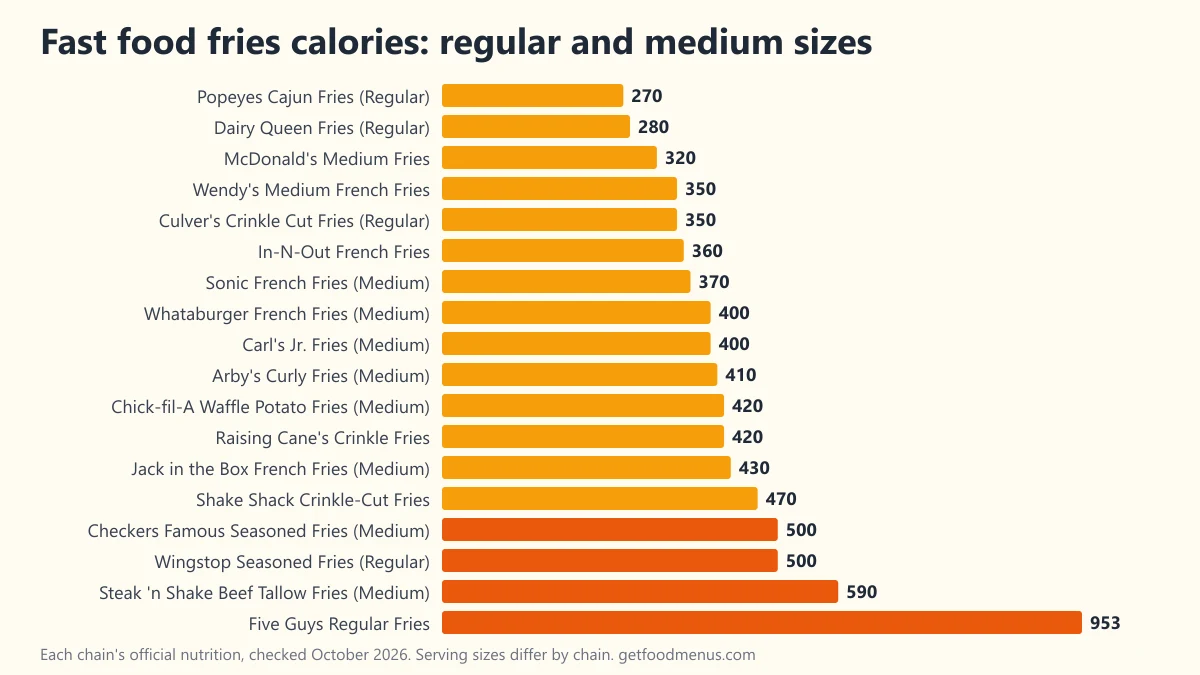
For comparison with a homemade batch, here is what a regular or medium order of fries contains at 18 chains. Serving sizes differ from chain to chain, so this compares what you are handed, not equal weights. A small McDonald's fries has 230 calories.
| Fries | Chain | Calories | Fat | Carbs |
|---|---|---|---|---|
| Cajun Fries (Regular) | Popeyes | 270 | 15g | 31g |
| Fries (Regular) | Dairy Queen | 280 | 13g | 36g |
| Medium Fries | McDonald's | 320 | 15g | 43g |
| Medium French Fries | Wendy's | 350 | 16g | 47g |
| Crinkle Cut Fries (Regular) | Culver's | 350 | 14g | 50g |
| French Fries | In-N-Out | 360 | 15g | 49g |
| French Fries (Medium) | Sonic | 370 | 22g | 39g |
| French Fries (Medium) | Whataburger | 400 | 21g | 51g |
| Fries (Medium) | Carl's Jr. | 400 | 19g | 51g |
| Curly Fries (Medium) | Arby's | 410 | 22g | 49g |
| Waffle Potato Fries (Medium) | Chick-fil-A | 420 | 24g | 45g |
| Crinkle Fries | Raising Cane's | 420 | 21g | 53g |
| French Fries (Medium) | Jack in the Box | 430 | 20g | 58g |
| Crinkle-Cut Fries | Shake Shack | 470 | 22g | 63g |
| Famous Seasoned Fries (Medium) | Checkers | 500 | 24g | 63g |
| Seasoned Fries (Regular) | Wingstop | 500 | 21g | 69g |
| Beef Tallow Fries (Medium) | Steak 'n Shake | 590 | 36g | 53g |
| Regular Fries | Five Guys | 953 | 41g | 131g |
Five Guys also sells a smaller Little Fries at 526 calories. All figures are from each chain's official nutrition information as checked in October 2026. For every chain's full numbers, see our nutrition guides.
Sources
- Idaho Potato Commission: How to Make the Best "Signature" Fresh French Fries, Ten steps to better homemade Idaho Potato french fries, The Best Hand-Cut Idaho French Fry Yield, Should we Blanch our Idaho Potatoes?, French Fried Potatoes and Q&A: How to Make Perfect French Fries. These guides were written for restaurant kitchens; the potatoes, temperatures and times apply to a home batch.
- USDA Food Safety and Inspection Service: Deep Fat Frying and Food Safety.
- U.S. Food and Drug Administration: Acrylamide and Diet, Food Storage, and Food Preparation.
- Fast food calories: each chain's official nutrition information, as published on the chain pages linked in the table.