
How to Cut Potatoes Into Fries: Size, Shape and Tools
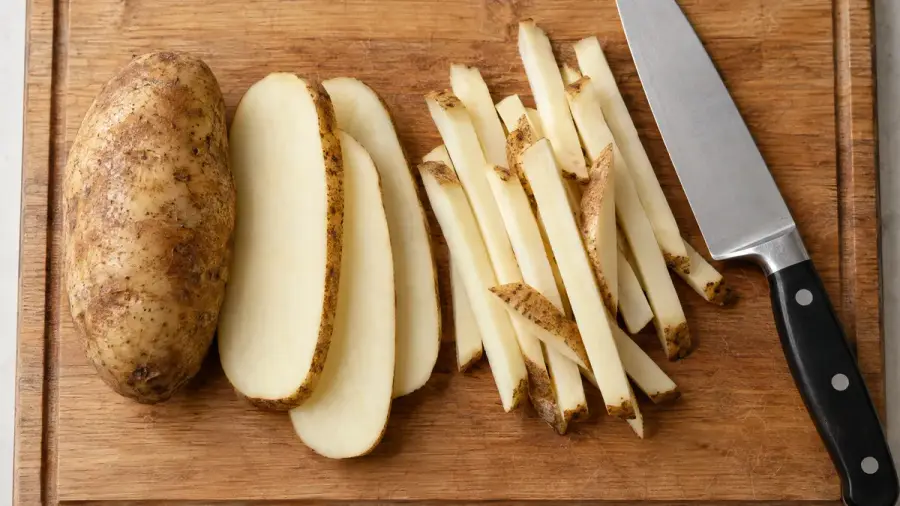
To cut potatoes into fries, wash a long russet potato, slice it lengthwise into flat slabs about 3/8 inch thick, then stack the slabs and slice them lengthwise again into strips of the same width. Keep every strip the same thickness, use a sharp blade, and drop the cut fries straight into cold water.
That is the whole method. The details below decide whether the fries cook evenly and stay in one piece. The guidance comes from the Idaho Potato Commission's fresh-cut fry guides, which are listed at the bottom. This page is one part of our full guide to making crispy french fries at home.
What you need
- Russet potatoes. For hand-cut fries the Idaho Potato Commission recommends potatoes of 7 to 15 ounces, with an oval shape, good length and shallow eyes. See our guide to the best potatoes for french fries.
- A sharp chef's knife and a cutting board.
- A large bowl of cold water to hold the cut fries.
- Optional: a fry cutter or a mandoline.
How to cut potatoes into fries, step by step
- Wash and dry the potatoes. Packed potatoes can still carry traces of sand or soil, so wash, rinse and dry them before cutting.
- Peel them, or leave the skin on. Both work. See the section on skin below.
- Make a flat base. Slice a thin piece off one long side so the potato sits flat on the board and does not roll.
- Cut slabs. Slice the potato lengthwise into flat slabs, each about 3/8 inch thick.
- Cut strips. Stack two or three slabs and slice them lengthwise again, 3/8 inch apart, into strips.
- Put the fries in cold water. Cut them into a bowl of cold water so they do not darken while you finish the rest.
Cutting along the length of a long, oval russet is what gives you long fries.
How thick to cut french fries
A 3/8-inch fry is a good target for a home batch. It is the cut used by a Chicago fry shop whose method the Idaho Potato Commission reviewed and described as right on target.
Whatever thickness you choose, keep it the same for every strip. The Commission notes that thicker steak-cut fries need a longer first fry than thin shoestrings. A batch that mixes thick and thin strips cannot all be done at the same moment.
Why a sharp blade matters
A dull knife or a worn cutter blade does not slice cleanly. The Idaho Potato Commission describes it as feathering the potato: the cut leaves small jagged edges along the strip.
- Those edges fracture when the fries are stirred in water or shaken in the oil, so long fries break into short pieces.
- Shorter, broken pieces have more surface area, and the Commission points out that this means more oil is absorbed.
If your fries come out short and ragged, check the blade before you blame the potato.
Skin on or peeled
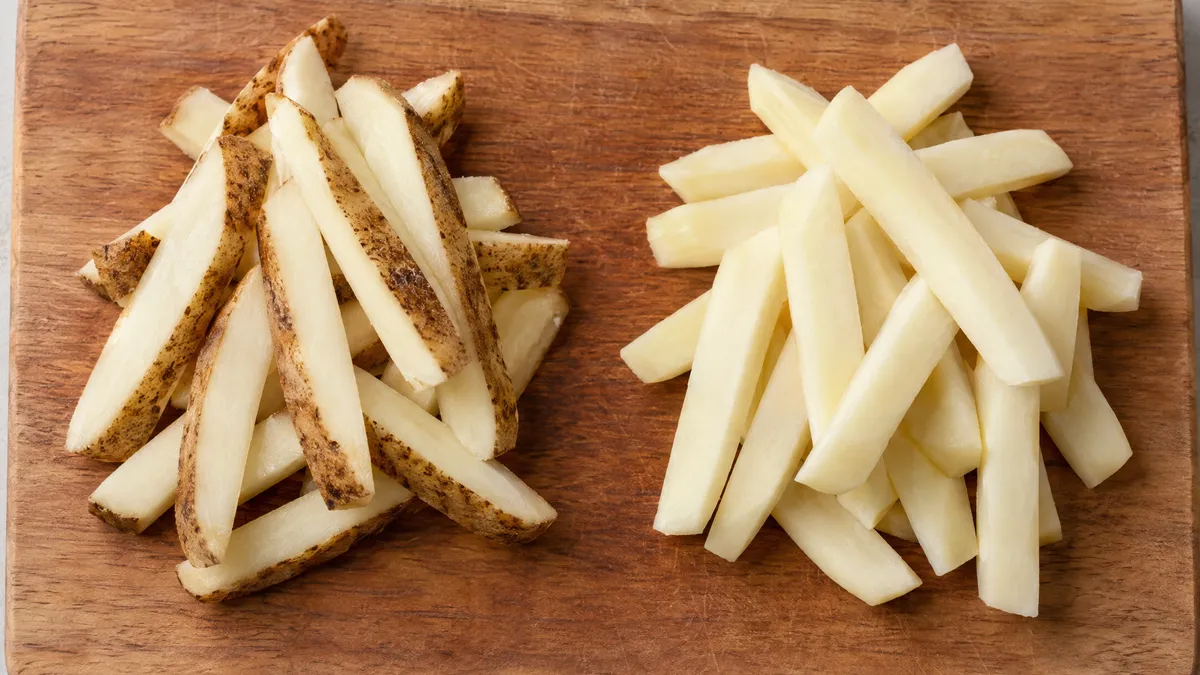
The Idaho Potato Commission recommends keeping the skin on: it adds to the homemade look and to the flavor. If you peel the potatoes, the Commission says the cut fries should be chilled in cold water for 30 minutes to 2 hours before frying for maximum crispness.
Knife, fry cutter or mandoline
- Knife: all you need for a home batch, as long as it is sharp.
- Fry cutter: a table-top or wall-mounted cutter does the whole potato in one pass. The Commission's advice for cutters is to keep the slide clean and free of potato starch, and to replace the blades when the cut turns ragged. Very large potatoes, about a pound or more each, are too big for most cutters and have to be halved with a knife first.
- Mandoline: the Commission lists it as another method for smaller batches of fresh fries.
What to do right after cutting
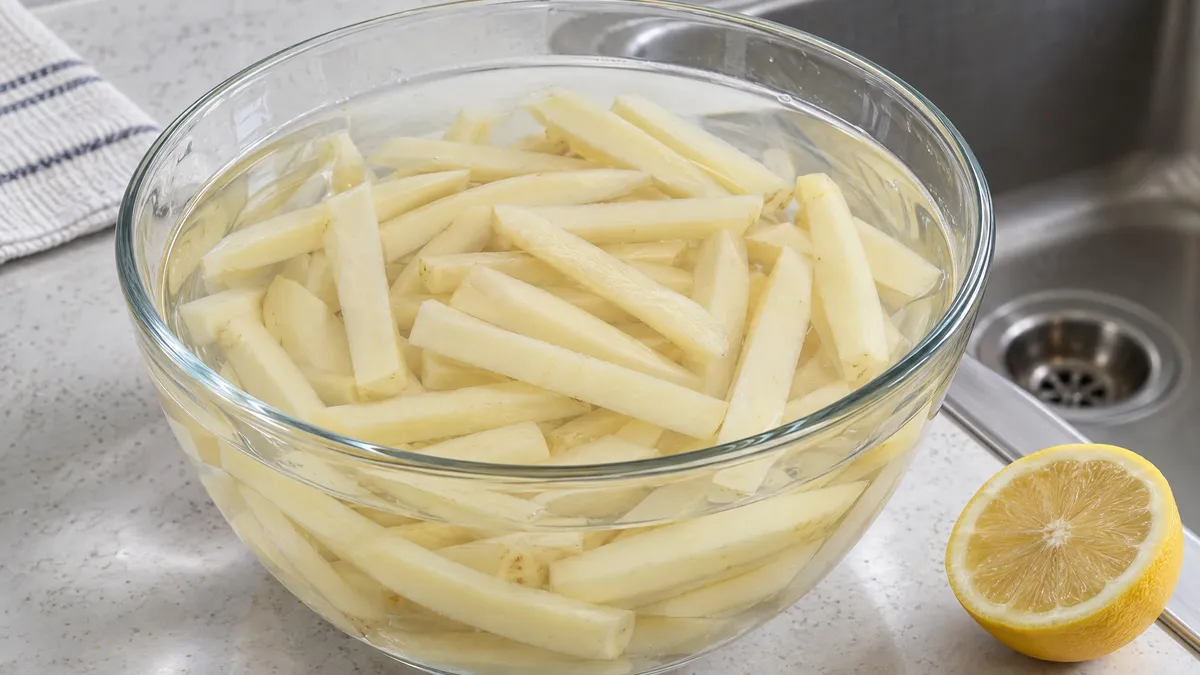
- Rinse the cut fries in cold water until the water runs clear. This removes the excess starch and sugar on the surface.
- Soak them in cold water. The FDA recommends soaking raw potato slices for 15 to 30 minutes before frying. A tablespoon of white vinegar or lemon juice per gallon of water keeps them from darkening.
- Dry them thoroughly before they go near hot oil.
From here, the fries are ready for the two-stage fry. The temperatures are in our guide to the oil temp for french fries, and the full method is in how to make crispy french fries.
Sources
- Idaho Potato Commission: Ten steps to better homemade Idaho Potato french fries, Q&A: How to Make Perfect French Fries, The Best Hand-Cut Idaho French Fry Yield, To Create Perfect French Fries It's Important To Always Blanch Them and How to Make the Best "Signature" Fresh French Fries. These guides were written for restaurant kitchens.
- U.S. Food and Drug Administration: Acrylamide and Diet, Food Storage, and Food Preparation.